At first glance, the sidewall of a tyre can look like it’s covered in random letters and numbers. But once you know what you’re looking at, it becomes a really useful guide to knowing if a tyre is right for you, your car and your driving priorities. That is what really matters.


Here’s a quick guide on how to read your tyre sidewall.
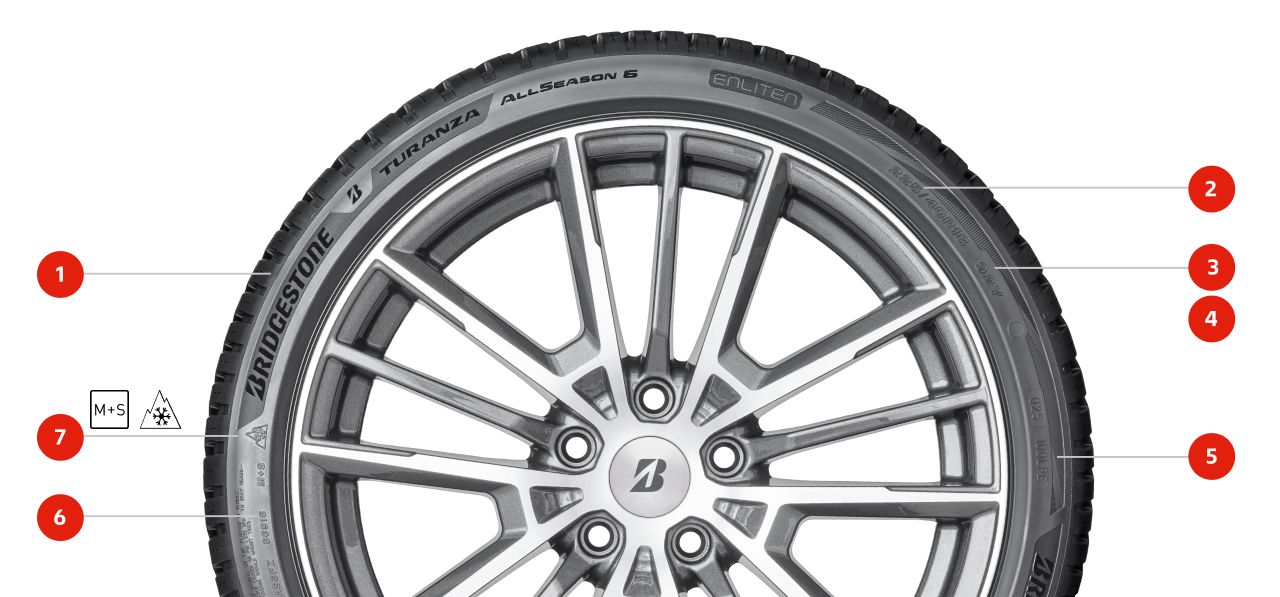
Bridgestone tyre sidewall information

1. Tyre manufacturer and model name: The most visible information on your tyre tells you two things: who made it, which is often a good first indicator of its quality and reliability, and its model name. The model name typically tells you what the tyre is designed for – be it sporty performance, winter conditions or another driving priority. In the image above, we can see that the tyre is made by Bridgestone and its model name is Turanza All Season 6, which is an all-season tyre.

2. Tyre size: This tells you the physical size of the tyre and the wheel size it will fit in. The tyre size in the above image is 225/40 R18. Let’s break down what that means:


- 225 is the width of the tyre in millimetres (measured from side to side).

- 40 is the aspect ratio – the height of the tyre sidewall as a percentage of the width. In this case, the sidewall height is 40% of the width.

- R means it’s a radial tyre, which is standard for modern cars and tyres.

- 18 is the diameter of the wheel rim in inches (i.e. the size of the wheel it fits).

3. Load index: The load index is a numerical code that shows how much weight the tyre can safely carry. A higher number means a higher load capacity. This tyre’s load index of 92 means the tyre can support up to 630kg.

4. Speed symbol: The speed symbol tells you the maximum speed the tyre can safely handle. Our example has the symbol ‘Y’, which means the tyre can handle speeds up to 300 km/h (186 mph). Alongside Y, here are the other common speed symbols:


- Q = 160 km/h (99 mph)

- T = 190 km/h (118 mph)

- H = 210 km/h (130 mph)

- V = 240 km/h (149 mph)

5. Homologation marks: These symbols indicate that the tyre meets certain region or country-specific safety and quality standards.

6. DOT code: This is an alphanumeric code composed of 11 digits (newer tyres have 13), which is sometimes preceded by the acronym ‘DOT’*. The last four digits of the code show the week and year that the tyre was manufactured in. For example, ‘2522’ means the tyre was made in week 25 of 2022. As there are 52 weeks in a year, the week ranges from 01 to 52. This is useful if you’re checking how old your tyres are.

7. M+S and 3PMSF symbols: M+S stands for ‘Mud and Snow’; 3PMSF, which stands for ‘Three Peak Mountain Snowflake’ (and is also known as the Alpine symbol), shows the tyre has been tested for winter performance. These markings are found on winter and all-season tyres, and are important if you drive in colder or snowy conditions, or in countries with winter tyre regulations. Several EU countries have winter tyre regulations which refer to 3PMSF.

Why is this important?


Being able to read and understand your tyre sidewall information helps you make more informed and safer decisions on the road. Whether you're replacing tyres or checking your car's current setup, knowing these details help to ensure that your tyres meet your driving needs and are the right fit for your vehicle.


*The letters 'DOT' are only required when the tyre is also offered in the US. Tyres offered exclusively in the EU do not automatically include the 'DOT'.